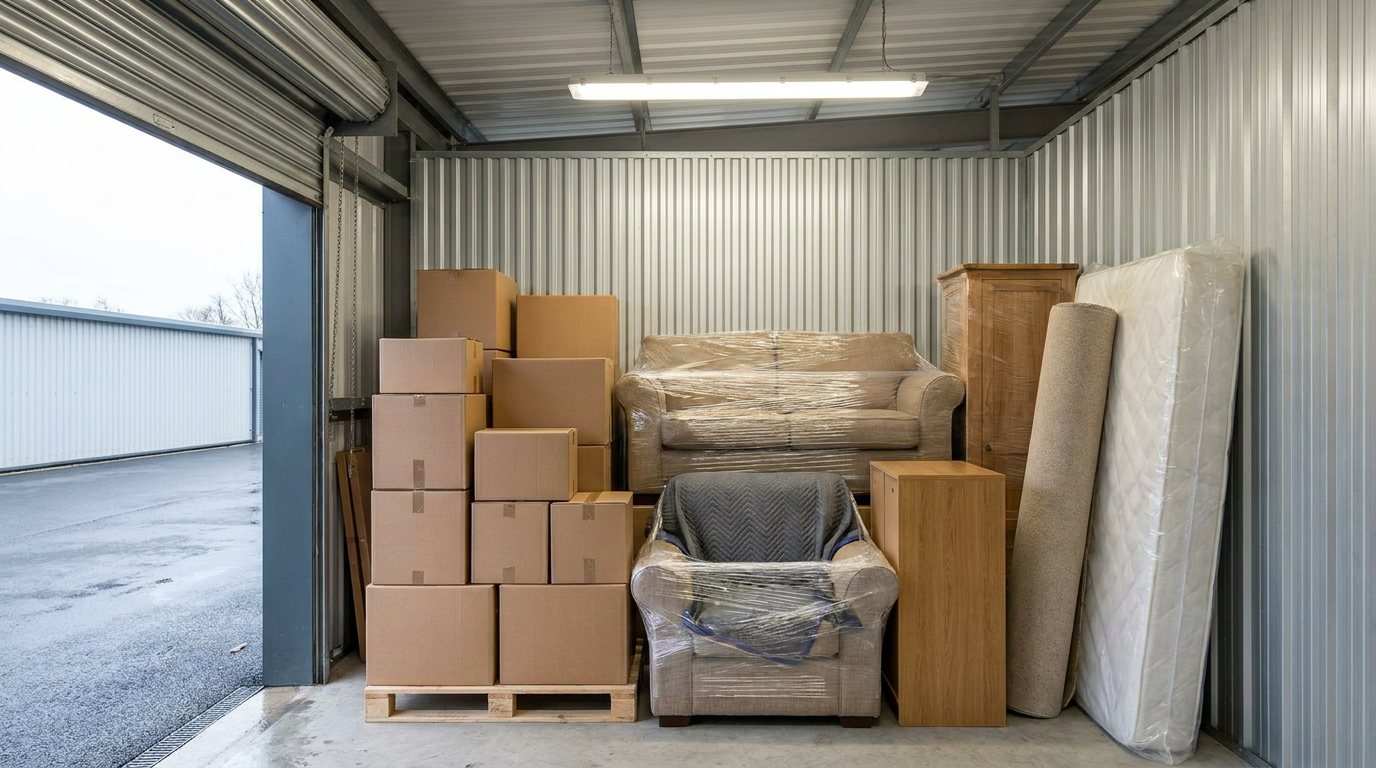
Building your own home means spending a long time thinking about foundations, roof trusses and window deliveries. The contents of the house you have just sold rarely get the same attention. Yet the sofa, the beds and every box from the loft need somewhere to live until the new place is finished, and a self-build gives you very little certainty about when that will be.
Plan for the programme to slip
Self-builders tend to start with a confident completion date, then meet weather, supplier delays and inspections that take their own course. Storage planned around the best case quickly becomes a source of stress. Ask from the start how the arrangement can be extended, what notice you need to give, and how flexible the delivery can be at the end.
It also helps to think of the project in stages. The building may be watertight well before it is habitable, and it can be tempting to bring furniture back early. Wet plaster, drying screeds and sanding dust are hard on upholstery and timber, so hold everything back until the trades have properly left the rooms concerned.
Decide what you are really living with
Many self-builders spend the project in a rental, with relatives or in a caravan on site. If you are considering a caravan, check the position with your local planning department first and make sure you have thought about services and winter conditions. Whichever you choose, the space will be small, so divide your belongings into three groups.
- Daily life: clothes for every season the build might span, work equipment, basic kitchen kit and medication.
- Project papers: plans, warranties, building control correspondence and finance documents, kept with you rather than in a box.
- Everything else: furniture, books, pictures, spare bedding and the contents of the garage, which can go into storage.
Be honest about the seasons. A build that begins in spring can easily run into the following winter, and the coats you packed away in May will be needed long before the handles go on the doors.
Prepare for a long stay rather than a short one
Goods going away for many months deserve more care than those stored for a fortnight. Clean and fully dry everything first, including fridges, freezers and washing machines. Wrap upholstery so that it can breathe, avoid leaving anything damp in a sealed box, and take beds and tables apart where that makes them safer to stack.
Make a numbered inventory and photograph anything valuable before it goes. It is worth checking what insurance applies while goods are stored, because household cover does not always extend to items kept elsewhere for a long period. Ask your insurer directly and get the answer in writing.
Keep one firm responsible for the whole journey
Hiring a van, renting a unit and then repeating the exercise a year later is a heavy commitment when you are also managing a building site. Combining the move and the storage leaves you with fewer things to organise. In West Berkshire and the surrounding area, Moving Forward Removals offers arranged storage in Berkshire through trusted facilities: its team collects belongings, transports them to a clean, monitored store and delivers them to the new property when you are ready, with one point of contact throughout.
Think about the delivery day now
A newly finished house can still sit on a rough site. Before the furniture returns, check that the drive has been surfaced or can take a large vehicle, that skips and scaffolding have gone, and that any new floors are protected. Send your removers a plan showing which piece goes in which room, since the layout exists nowhere but in your drawings.
Consider having the delivery in two parts if your storage arrangement allows it. Essentials can arrive first, leaving the bookcases and spare-room furniture until the last of the snagging has been done.
A self-build asks you to live with uncertainty for a long while. Getting your possessions safely out of the way means one fewer thing to worry about while the house takes shape.