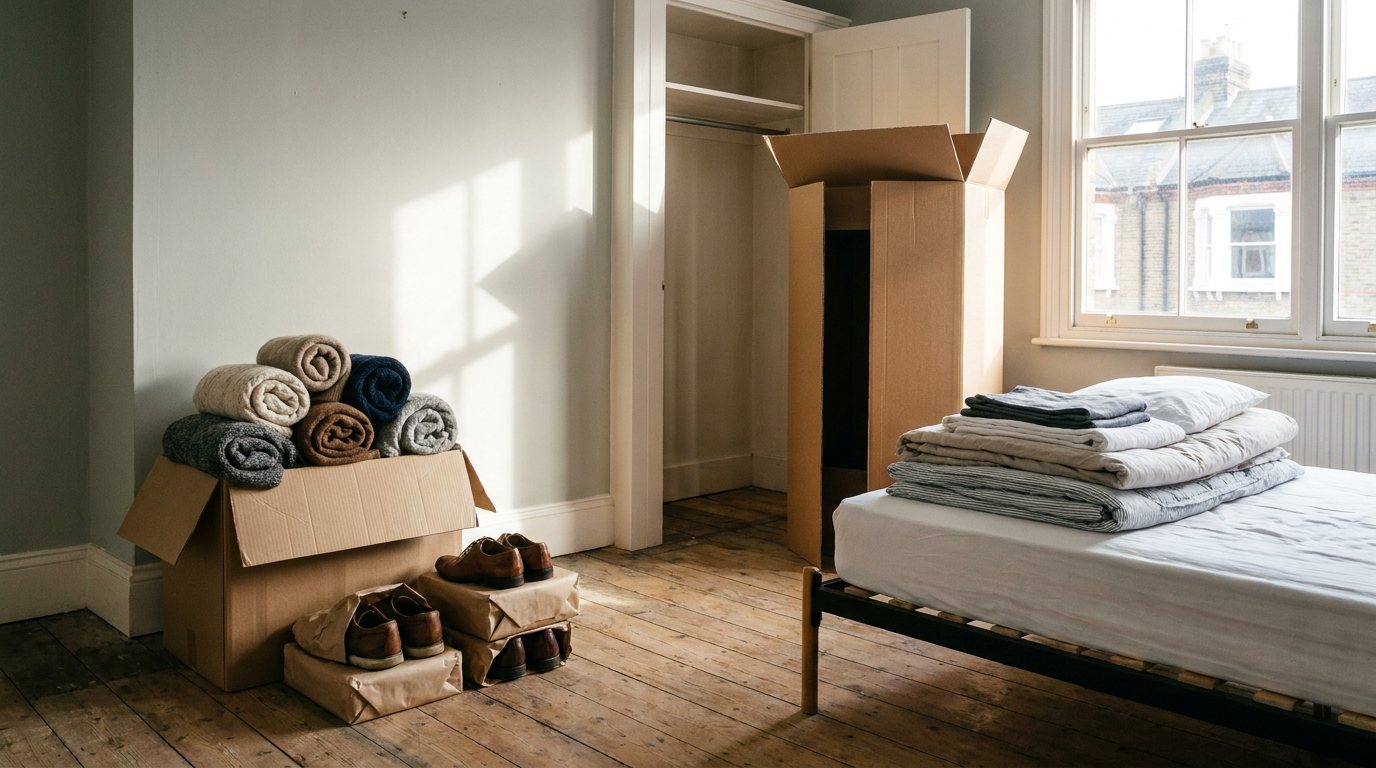
The bedroom is usually the last room packed and the first one you need at the new house. You sleep in it the night before the move and you will want to sleep in the new one that evening. That makes the order of packing more important than in any other room. Done in the right sequence, the bedroom goes into boxes smoothly and comes out again quickly.
Begin with what you will not miss
A week or two before the move, start with anything you do not need day to day. That includes out-of-season clothes, spare bedding, items stored under the bed and anything on top of the wardrobe. This is also the moment to clear out. Clothes that no longer fit and shoes that have not been worn in years can be donated or recycled before you pay to move them.
Pack these items into labelled boxes and stack them in a corner, out of the way of daily routine.
Drawers and folded clothes
Next, empty the chest of drawers. Folded clothes travel well in medium-sized boxes; avoid very large ones, which become heavy and awkward when full. Roll T-shirts and jumpers to save space and reduce creasing. Socks and underwear can fill gaps around larger items.
Do not move furniture with clothes still in the drawers. It makes a chest much heavier and can strain the runners. Remove the contents, then tape the empty drawers closed or take them out and carry them separately.
Shoes and accessories
Shoes are best packed in pairs, wrapped in packing paper so they do not scuff each other, and placed in a small or medium box with heavier footwear at the bottom. Stuffing paper inside shoes helps them hold their shape. Belts, ties and scarves can be rolled and tucked into the gaps. Jewellery and watches are small, valuable and easily lost, so keep them with you rather than in a box on the van.
Hanging clothes last
Your hanging clothes are what you will reach for in the final days, so leave them until near the end. When the time comes, wardrobe boxes let you move them on their hangers, straight from rail to box and back again. Boxes and Bubble, a family-run packaging shop in Fulham, west London, shares packing and moving tips on its website, including a simple way to estimate how many wardrobe boxes you need: measure the length of the hanging clothes on your rails. The shop points out that some people manage without wardrobe boxes, but that using them can save you ironing after the move.
Keep one or two outfits aside for moving day and the day after, and pack them in your overnight bag.
Bedding and the first-night box
On the final morning, strip the bed and pack the bedding into a clearly marked box or bag that travels with you or is loaded last on the van. Add pillows, a towel, toiletries, phone chargers, any medication and a few basics such as a torch and a small toolkit for reassembling the bed frame. Mattress protectors are worth using to keep the mattress clean in transit.
If the bed needs to be dismantled, put all the screws and fittings in a labelled bag and tape it to the headboard so nothing goes missing.
Labelling for the new house
Mark every bedroom box with the room it is going to, using the layout of the new house rather than the old one. If there are several bedrooms, number or name them and tell your removal crew. Boxes then go straight to the right room, and setting up the beds becomes the first job rather than the last.
Packing a bedroom is mostly about timing. Start with what you will not miss, finish with what you use every day, and keep the first-night essentials close. That way, your first night in the new house can be a comfortable one.